
Christopher Dawson Centre for Cultural Studies

21 August, 2026
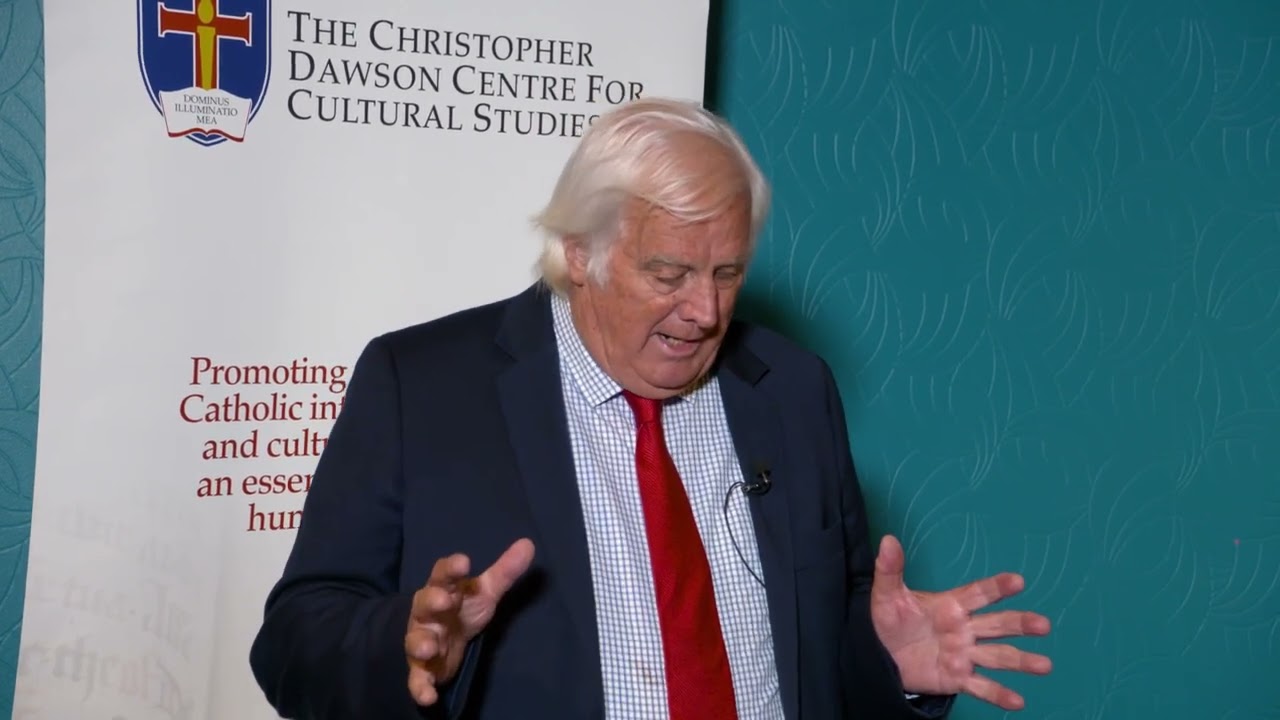
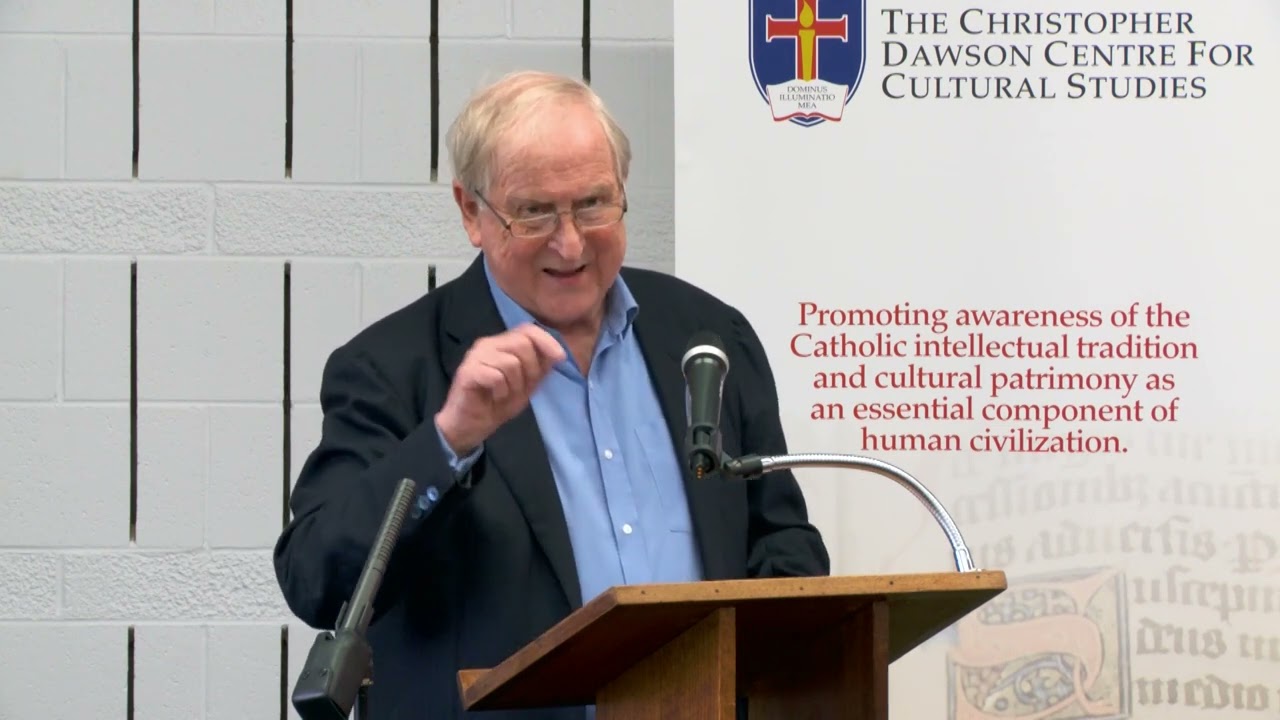
Dear Supporters, I am very pleased to report on a successful 2026 Colloquium. The room was at capacity for the powerful keynote address delivered by Senator Ralph Babet on the Friday evening, on the topic ‘Politics needs Christ’. And the following day twelve papers were presented to a mostly full room from 9:00am through to 5:00pm. The content of the talks was excellent and I am very grateful to all the presenters who took the time to prepare their respective papers. The recordings of the talks will be available on the Christopher Dawson Centre YouTube site shortly. We will also be preparing a volume of the proceedings featuring the papers presented, to be available early next year. Support for 'Children Born Alive Protection Bill' Given the good work that Senator Babet undertook (along with Senators Matt Canavan and Alex Antic) in seeking to give specific legal protections to babies born alive after attempted abortion, I am pleased to see that Llew O'Brien, member of the House of Representatives seat of Wide Bay, has now introduced a private members bill to again take up this issue.
Giggle v Tickle: When Law contradicts Truth
by Alexander Sidhu, 29 June 2026
The recent Federal Court ruling in the case of Giggle v Tickle dismissing the appeal of Giggle app founder Sall Grover on Friday 15 May 2026, confirmed that Australian law has reached a crisis point.
In this decision the Court upheld the original finding of Justice Bromwich that Australian law should be understood to regard ‘sex’ as something which is neither binary (limited to male and female) nor fixed.
In other words, it confirmed that Australian law no longer clearly and definitively holds an understanding of sex as grounded in biological reality.
This is a very worrying development. When the law departs from biological reality, the truth of reality, the very authority of the law is itself thrown into question. If law is not based on and limited by the true and objective understanding of reality, then it has no secure foundation and becomes endlessly manipulable according to subjective whim.
The higher law: natural law and the Eternal Law
This situation has been a central concern of the Christian tradition from the beginning. The Catholic Church has consistently taught that human law can only authentically be considered law if it does not contradict the higher law of God, the Eternal Law, which is the truth of God’s ordering of reality. When human law does contradict the Eternal law, as Thomas Aquinas teaches, it cannot be regarded authentically as law. As he states:
Human law has the nature of law in so far as it partakes of right reason; and it is clear that, in this respect, it is derived from the eternal law. But in so far as it deviates from reason, it is called an unjust law, and has the nature not of law but of violence.[1]
In other words, if law is not grounded in objective truth, it can only be a matter of subjective will and ultimately of violence, and so ceases to be ‘law’ properly understood.
A fundamental element of God’s ordering of reality (which is a central doctrine of the Catholic faith) is the creation of human beings in the form of two sexes (or fundamental types), male and female. This understanding of human beings existing as one of two types or ‘sexes’, male or female, is not simply a position found in Christian divine revelation rather it has been recognised by all human communities from the beginning of human existence. The recognition of the existence of two complementary sexes is an inescapable fact of human existence; it provides the very basis for the generation of new life and therefore the continuation of the human race; that procreation is only possible through the sexual union of one man and one woman.
For the law to deny that humanity exists in the form of one of two sexes, a reality which is fixed and unalterable, goes to undermine the fundamental basis of society itself, the natural family, for which the law itself, properly understood, actually exists to protect and promote.
This is not merely some minor ‘legal’ issue, but rather constitutes a fundamental, indeed existential crises, for our society.
The Catholic Church has consistently affirmed Aquinas’ teaching on law in its central teaching documents. We can therefore take the Church to reject as authentic law any legislation that denies the truth of human biological sex as binary and fixed, as such a position directly contradicts the Eternal law and ‘right reason’.
This means that from the Church’s perspective those sections of Australian law that reject the truth of biological sex, cannot be regarded authentically as ‘law’, but a corruption of law, properly understood.
This kind of understanding is not simply to be found in the Christian tradition but also much earlier in the ancient Greek philosophical tradition, which maintained that society should be guided not by mere custom and convention, but rather in accordance with the fixed order in reality. These thinkers which included figures such as Socrates, Plato and Aristotle, maintained that there was a fixed order to reality which could at least be partially discerned by human reason, and in the most basic terms, that human beings only authentically flourish if they live in accordance with this ordering, the ‘truth’.
This understanding resulted in what has been referred to as the ‘natural law’ tradition; that there is a higher standard against which to judge human actions and indeed law. Perhaps the most famous example of this understanding can be found in Sophocles play ‘Antigone’ Both Augustine and Aquinas further developed this understanding of the ancient Greek philosophical, synthesising it with the teaching of Christian revelation.
Gender Ideology
The key legislative change which created this situation- the denial of biological reality in the law- was the Gillard Government’s 2013 amendment of the Commonwealth Sex Discrimination Act which included ‘gender identity’ as a protected attribute. This effectively removed the legal grounding of sex in biological reality.
The understanding behind this change comes from what has been referred to as ‘gender ideology’, which rejects the concept of biological ‘sex’ as binary and fixed. Rather it seeks to understand the human person in terms of self-created gender ‘identities’, where there is no fixed biological reference point. This requires individuals to be treated legally according to whatever they may identify as, no matter how radical or separated from reality. Taken to its logical conclusion even the concept of being ‘human’ becomes meaningless, and unnecessarily restrictive.
Pope Francis recognised this problem and was one of the most outspoken critics of ‘gender ideology’. He described it as an ‘ugly ideology of our time’, which seeks to erase the notion of biological sex, created by God[2]. He argued that this category of biological sex is so foundational to the human person that in seeking to erase it, gender ideology is effectively seeking to ‘erase humanity’ itself.[3]
In his encyclical Laudato si Pope Francis went even further to warn us that ‘once the human being declares independence from reality and behaves with absolute domination, the very foundations of our life begin to crumble.’ (no 117) He therefore regarded the teaching of gender ideology to children as particularly pernicious, the notion ‘that everyone can choose their gender’, as a form of ‘ideological colonization’, which ‘is terrible’.[4]
Pope Francis has made it very clear that the Catholic Church, and therefore Catholics, cannot affirm any understanding of gender that is not based on the biological reality of sex as binary (male and female) and fixed.
Urgent change required
On the basis of this understanding, urgent change is required to Australian law, particularly the Sex Discrimination Act, to address the crisis in legitimacy. Until it is corrected, both the Christian and the person committed to reason and science cannot recognise sections of the Act that contradict the truth, as legitimate law.
An unsuccessful attempt was made by Senator Alex Antic several years ago to address this situation by introducing a private member’s bill to remove ‘gender identity’ from the Sex Discrimination Act and insert definitions of ‘man’ and ‘woman’ based in biological reality.
However, the public outrage over this recent decision by the Federal Court, has led the three major opposition parties, Liberal, National and One Nation, just days after the decision was released, to commit to amending the Sex Discrimination Act to again recognise the biological reality of sex.
If current polling trends continue through to the next Federal election, it is likely that there will be sufficient support in the Commonwealth Parliament to finally pass such amending legislation.
The Dawson Centre will work for this change to occur and strongly commends all people of good will to contact their political representatives both at the state and federal level to advocate this change.
Witness to the truth
The great Russian thinker and writer Alexander Solzhenitsyn authored a famous essay titled ‘Live not by lies’ in which he warned the Russian people about not giving into the ideological coercion of the totalitarian Russian state. As he argues in this essay, when a society lives by lies, it is headed for certain demise and ultimately destruction. Without the sure foundation of the truth there can only be the reign of arbitrary subjective will.
The recognition of and respect for the truth by all in society is therefore the minimum necessary requirement for authentic politics, for authentic democracy.
It is important to recognise the courage of individuals such as Sall Grover for following the same path that Solzhenitsyn chose, in refusing to live according to lies. This is not an easy path; there is always a price to pay in this world for being what Pope John Paul II referred to as ‘a witness to the truth’. If we are to have any hope of arresting what seems to be unstoppable decline in western civilisation we must all seek to become ‘witnesses to the truth’.
[1] Aquinas Summa Theologica, I-II q 93, a 3.


‘It is true that Christianity is not bound up with any particular race or culture. It is neither of the East or of the West, but has a universal mission to the human race as a whole…’
– Christopher Dawson



Upcoming Events
15
SEPT
Cultural Exchange Symposium
10:00 AM -
4:00 PM
Christopher Dawson Centre,
123 Main Street
22
OCT
Film Screening: Diversity in Cinema
5:00 PM -
8:00 PM
Cinema Hall,
456 Elm Avenue
10
NOV
Cultural Heritage Tour
9:00 AM -
2:00 PM
Various Locations